TONY SCOTT
Landscapes
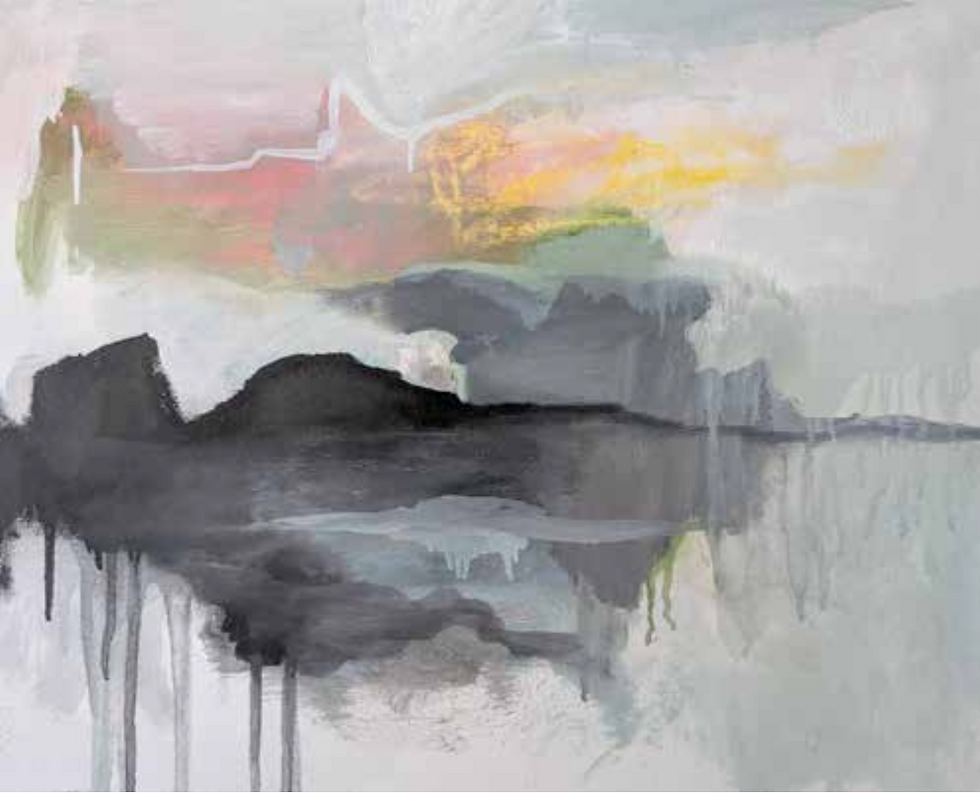
Mountain peaks beneath big skies, sweeping storm clouds, and the shapes of traditional Chinese ‘scholar rocks’ are a constant presence in Tony Scott’s works, the emphasis in his paintings, mixed media works, and installations is on the importance of landscape and the visceral physicality of paint.
Although Scott now lives and works in the small Victorian country town of Castlemaine, China is ever present in his work. Recurring images of mountains, clouds and human body parts evoke the Daoist/Confucian cosmology of tian di ren heyi, in which everything under heaven (tian) exists in a mutually reciprocal and interdependent relationship. In Daoist/ Confucian and Buddhist belief, the mountains are the home of the Immortals, and the earth contains the ancestors. Dramatic peaks wreathed in clouds were the favourite subjects of the literati shan shui (mountain and water) painters, and mountains beneath cloud-filled skies are a constant theme in Scott’s works too.
In his Castlemaine studio Scott’s work has taken on a new energy; he has been feverishly prolific. It is as if imagery, colour, form, and painterly surfaces have been simmering and strengthening since his homecoming from China. Often, as with the Storm Approaching series, there is a sense of foreboding in these paintings. White clouds partially conceal mysterious calligraphic marks that hover over the mountain range below or resemble sinuous river systems seen from above. Black Mountains are the most foreboding of Scott’s mountain landscapes; layers of acrylic, oil paint, and oil stick on paper and canvas are scraped, scored and sgraffitoed with mysterious markings. A sliver of light over the humped forms of mountains beneath heavy clouds lit by flashes of lightning suggests the unpredictable power of nature.’
Luise Guest 2021
extract from Cartographies of Memory: the work of Tony Scott
for the Tony Scott survey exhibition at Glen Eira City Council Gallery, Caulfield, Victoria